Caring About How You Look Isn't Shallow — It's Actually a Form of Self-Respect

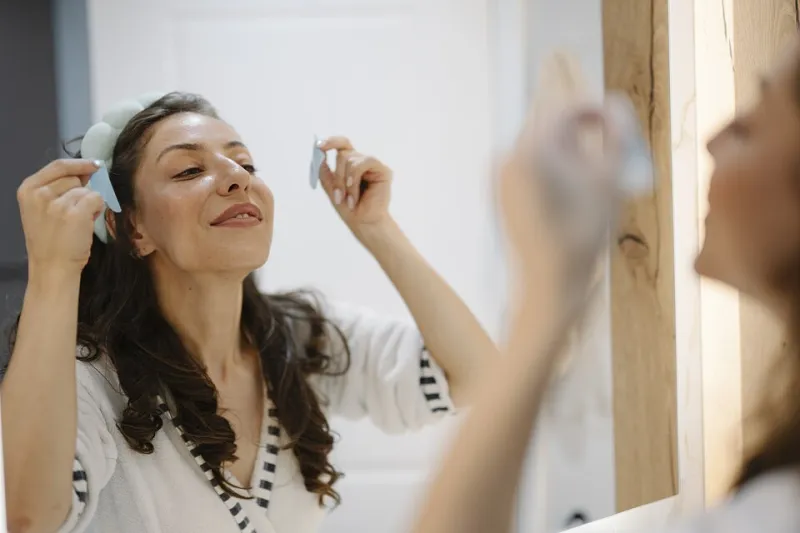
Photo: confident woman morning skincare routine self-care mirror bathroom, via planosdemetro.com
Somewhere along the way, a strange idea took root in our culture: that the woman who spends time on her appearance is somehow less serious, less intellectual, less worthy than the one who doesn't. That caring about your skin, your style, or your morning ritual is a vanity tax — something you pay for being frivolous.
We're calling that out. Because that narrative isn't humility. It's a trap.
The False Modesty We've Been Sold
There's a particular brand of self-deprecation that gets a lot of social approval — the "I woke up like this" mythology, the eye-roll at anyone who admits they actually tried. It shows up in offhand comments like "I don't have time for all that" or "I don't care what people think of me." And while there's genuine freedom in not being enslaved to other people's opinions, there's a difference between that and dismissing self-care entirely as something beneath you.
The truth is, most of us feel better when we feel put-together. Not because we're performing for an audience, but because how we present ourselves to the world is a form of communication — with others, yes, but more importantly, with ourselves. Your morning skincare routine, that swipe of your favorite lip color before a big meeting, the haircut you finally booked after months of putting it off — these aren't acts of ego. They're acts of intention.
Internal Alignment vs. External Pressure: Knowing the Difference
Here's where the conversation gets more nuanced, because not all beauty investment is created equal. There's a genuine psychological distinction between doing something for yourself and doing it at yourself — or worse, for someone else's approval.
External pressure looks like: changing your style because a partner commented on it. Buying a product because an influencer made you feel like your skin was a problem that needed fixing. Feeling anxious when you leave the house without a full face on, not because you love makeup, but because you're afraid of what people will think.
Internal alignment looks different. It feels quieter. It's the lipstick you wear on a Tuesday when you have nowhere to be, just because the color makes you happy. It's the skincare routine you do at night that signals to your body and brain that the day is winding down. It's the haircut that finally matches the version of yourself you've been growing into.
One is driven by fear. The other is driven by self-knowledge. And that distinction matters enormously for your mental health.
The Psychology Behind Looking Like You Tried
Research in behavioral psychology has long pointed to something called enclothed cognition — the idea that what we wear (and by extension, how we groom and present ourselves) actually influences how we think and feel. It's not just that confidence changes how others perceive you; it changes how you perceive yourself.
When you take time to care for your appearance in a way that feels authentic, you're essentially sending yourself a message: I'm worth the effort. That's not vanity. That's the opposite of vanity. Vanity is about performing for external validation. This is about showing up for yourself.
Think about how you feel after a long week when you finally get that facial, or when you find a foundation that actually matches your skin tone, or when you step into a room wearing something that feels unmistakably, unapologetically you. That feeling isn't superficial. It's connected to something real about dignity, agency, and self-expression.
When Glow Culture Gets It Wrong
None of this means the beauty industry is without its problems — because it absolutely has them. There's a version of "invest in yourself" messaging that's really just designed to make you feel perpetually inadequate so you keep buying. The before-and-after culture, the skin-shaming disguised as skincare advice, the relentless push toward a very specific, very narrow version of what a "glow-up" is supposed to look like.
Recognizing that trap is part of developing a healthy relationship with beauty. The goal isn't to spend more or do more or chase some impossible standard. It's to get clear on what actually resonates with you — what makes you feel like yourself — and invest there, intentionally.
That might mean a ten-step routine. It might mean three products and five minutes. It might mean bold color or it might mean none at all. The philosophy isn't about the specific choices. It's about making them from a place of self-awareness rather than insecurity.
Showing Up for Yourself Is Showing Up, Period
Here's the thing nobody says enough: how you take care of yourself is connected to how you show up in every other area of your life. Not because looking polished makes you more deserving of respect — it doesn't, and anyone who treats you otherwise isn't worth your time. But because the habit of tending to yourself, of treating your body and your appearance as something worthy of attention and care, bleeds into how you move through the world.
Women who have built beauty rituals they love often describe them as anchoring. The routine itself — whatever it looks like — becomes a daily act of self-affirmation. It's not about perfection. It's about presence.
So the next time someone implies that caring about how you look is somehow at odds with being a serious, grounded, intelligent person, you can smile and let it go. You know the difference between chasing an ideal and honoring yourself.
And that difference? That's where the real glow lives.